Theories of time travel in science Exploring Einstein and Hawkings Concepts

Theories of time travel in science sets the stage for this enthralling narrative, offering readers a glimpse into a story that is rich in detail with entertaining interactive style and brimming with originality from the outset.

Time travel has long been a captivating subject in scientific discussions, with renowned figures like Einstein and Hawking proposing intriguing theories that push the boundaries of our understanding of the universe. From wormholes to black holes, the concept of time travel is intricately linked to fascinating phenomena that continue to spark curiosity and imagination.

Theories of Time Travel in Science

Time travel mallett ronald theory machine traveler future possible space laser ring physics back dr will einstein light spike astronomy

Time travel is a fascinating concept that has captured the imagination of scientists and science fiction enthusiasts alike. It involves the idea of moving between different points in time, either forwards or backwards. The significance of time travel in scientific theories lies in its exploration of the fundamental nature of time, space, and the universe.

Einstein’s Theory of General Relativity

One of the most well-known theories related to time travel is Einstein’s Theory of General Relativity. According to this theory, time is not a constant but rather a dimension that can be influenced by gravity. Massive objects such as black holes can bend spacetime, creating the possibility of time dilation and time loops.

Hawking’s Chronology Protection Conjecture

Stephen Hawking proposed the Chronology Protection Conjecture, suggesting that the laws of physics prevent time loops and paradoxes from occurring. This idea stems from the belief that any attempt to create a closed timelike curve would lead to the destruction of the universe, maintaining the consistency of causality.

Wormholes, Black Holes, and Warp Drives

Concepts like wormholes, black holes, and warp drives are often associated with time travel. Wormholes are theoretical passages through spacetime that could create shortcuts for travel between distant points in the universe. Black holes, on the other hand, have intense gravitational fields that could potentially allow for time dilation. Warp drives, inspired by science fiction, propose the bending of spacetime to achieve faster-than-light travel.

Implications of Time Travel Paradoxes

Time travel raises intriguing paradoxes such as the grandfather paradox and the butterfly effect. The grandfather paradox involves a time traveler going back in time and preventing their grandfather from meeting their grandmother, leading to a contradiction of existence. The butterfly effect suggests that even small changes in the past could have significant and unpredictable effects on the future, highlighting the complexity of altering timelines.

Cooking and Culinary

Cooking has a rich history that dates back thousands of years, evolving from basic methods of roasting over an open flame to the sophisticated culinary techniques we see today. Throughout history, cooking has played a crucial role in shaping cultures and bringing people together.

Evolution of Cooking Techniques

Over time, cooking techniques have evolved to include methods such as baking, grilling, and sous vide. Each technique involves a unique approach to applying heat and flavor to ingredients, resulting in a wide variety of delicious dishes.

  • Baking: Baking involves cooking food in an enclosed environment using dry heat, such as an oven. This method is commonly used for bread, pastries, and desserts.
  • Grilling: Grilling is a cooking method that involves applying direct heat to food on a grill or open flame. It is popular for cooking meats, vegetables, and seafood, imparting a distinct smoky flavor.
  • Sous Vide: Sous vide is a technique that involves cooking food in a vacuum-sealed bag at a precise temperature in a water bath. This method ensures even cooking and helps retain the natural flavors of the ingredients.

Cultural Significance of Food

Food holds immense cultural significance, with different regions around the world showcasing their unique culinary traditions and flavors. From spicy curries in India to hearty pasta dishes in Italy, food plays a vital role in defining cultural identities and bringing communities together.

Region Signature Dish
Japan Sushi
Mexico Tacos
France Coq au Vin

Art of Flavor Pairing

Flavor pairing is an art that involves combining ingredients that complement each other to create harmonious and delicious dishes. Understanding the science behind flavor profiles can help chefs create well-balanced meals that tantalize the taste buds.

  • Pairing sweet and savory flavors can create a delightful contrast in dishes, such as combining honey with roasted meats.
  • Acidic ingredients like lemon or vinegar can help balance rich and fatty foods, adding brightness to the overall flavor profile.
  • Herbs and spices play a crucial role in flavor pairing, adding depth and complexity to dishes while enhancing the natural flavors of the ingredients.

Last Recap

Time travel theories evidence may proving exists

As we wrap up our journey through the theories of time travel in science, one thing is clear: the exploration of this concept not only challenges our perception of time but also opens up a world of possibilities that may one day become a reality. The mysteries of time travel continue to inspire scientists and dreamers alike, inviting us to ponder the intricate tapestry of the universe and our place within it.

General Inquiries

Is time travel possible according to current scientific understanding?

While the concept of time travel remains theoretical, some scientific theories suggest that it might be possible under certain conditions, such as with the help of advanced technologies or phenomena like wormholes.

What are some of the most famous paradoxes associated with time travel?

Two common paradoxes are the grandfather paradox, which involves changing events in the past to alter one’s existence in the present, and the butterfly effect, where small changes in the past can have significant effects on the future.

How do wormholes and black holes relate to time travel?

Wormholes are theoretical passages through spacetime that could potentially allow for time travel, while black holes, with their intense gravitational pull, also play a role in certain time travel theories.

Are there any real-life experiments or observations that support the concept of time travel?

As of now, there are no concrete experimental findings that definitively prove time travel is possible. However, ongoing research and theoretical work continue to explore the feasibility of such phenomena.

Ancient civilizations and alternative science Unveiling the Mysteries of the Past and Present

Ancient civilizations and alternative science

Step into a world where ancient civilizations and alternative science intertwine to reveal secrets of the past and challenges of the present. Brace yourself for a journey filled with wonder, controversy, and unexpected discoveries as we explore the fascinating realms of history and unorthodox scientific pursuits.

From the monumental legacies of ancient cultures to the groundbreaking theories of alternative science, this narrative promises to captivate your imagination and broaden your perspectives in ways you never thought possible.

Ancient Civilizations

Ancient science world review homeschoolways

Ancient civilizations played a crucial role in shaping modern society. Their advancements in various fields such as art, architecture, and culture have left a lasting impact that can still be seen today. Let’s explore the significance of ancient civilizations and their influence on the world.

Impact on Art, Architecture, and Culture

Ancient civilizations like the Egyptians, Greeks, and Romans made significant contributions to art, architecture, and culture. The Egyptians, known for their intricate hieroglyphics and massive pyramids, set the stage for monumental architecture. The Greeks introduced the world to classical art forms like sculpture and pottery, while the Romans perfected the art of engineering and built grand structures like the Colosseum.

  • Ancient Egyptian art focused on depicting gods, pharaohs, and daily life in detailed and symbolic ways.
  • Greek architecture emphasized balance, harmony, and proportion, with iconic structures like the Parthenon showcasing their mastery.
  • Roman culture was a melting pot of influences, incorporating elements from conquered territories into their art, architecture, and traditions.

Technological Advancements of Ancient Civilizations

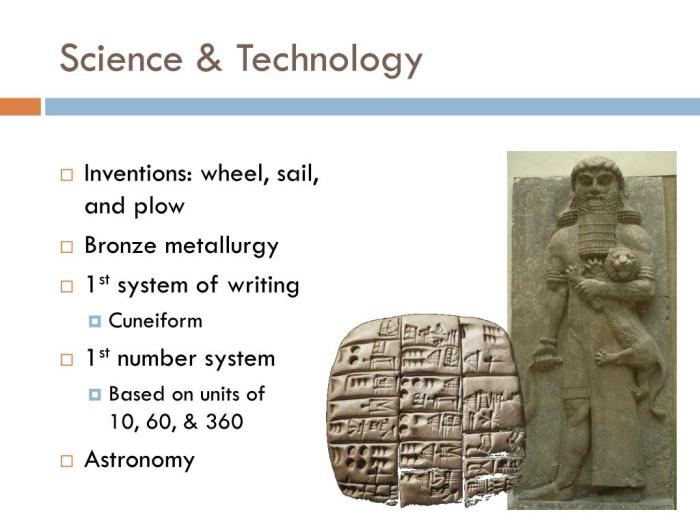
Different ancient civilizations had varying degrees of technological advancements that set them apart. The Mesopotamians invented writing with cuneiform, the Egyptians developed sophisticated irrigation systems, and the Chinese created paper and gunpowder.

  • The Mesopotamians’ use of cuneiform writing on clay tablets revolutionized communication and record-keeping.
  • Egyptian irrigation techniques along the Nile River enabled agriculture to flourish in an otherwise arid environment.
  • Chinese innovations like papermaking and gunpowder had far-reaching impacts on global history and technology.

Advanced Knowledge in Science and Technology

Some ancient civilizations were remarkably advanced in their understanding of science and technology. The Greeks excelled in mathematics and astronomy, the Mayans developed a sophisticated calendar system, and the Indus Valley civilization had impressive urban planning.

  • Greek mathematicians like Pythagoras and Euclid laid the foundation for modern geometry and algebra.
  • The Mayans’ precise calendar system demonstrated their advanced knowledge of astronomy and mathematics.
  • The Indus Valley civilization’s well-planned cities with advanced drainage systems showcase their engineering prowess and urban planning skills.

Alternative Science

Alternative science refers to the study and exploration of unconventional theories and practices that may not align with traditional scientific methods. This field often involves investigating phenomena that are not widely accepted or understood by mainstream science. Alternative science plays a crucial role in pushing the boundaries of knowledge and challenging established beliefs.

Relationship with Traditional Scientific Methods

Alternative science often operates outside the confines of mainstream scientific approaches, utilizing different methodologies and frameworks to explore phenomena that may be considered fringe or controversial by the scientific community. While traditional science relies on empirical evidence, peer-reviewed research, and the scientific method, alternative science may incorporate subjective experiences, anecdotal evidence, and unconventional theories in its investigations.

  • Alternative science may offer fresh perspectives and innovative ideas that can inspire new avenues of research within traditional scientific disciplines.
  • However, the lack of rigorous testing and peer review in alternative scientific practices can lead to skepticism and criticism from the mainstream scientific community.

Controversies Surrounding Alternative Scientific Practices

Alternative scientific practices often face scrutiny and skepticism due to the lack of empirical evidence, peer-reviewed studies, and adherence to established scientific standards. Controversies may arise when alternative theories challenge widely accepted scientific principles or when claims cannot be substantiated through rigorous testing.

It is essential for alternative scientists to maintain transparency, rigor, and openness to criticism to gain credibility and acceptance within the broader scientific community.

Examples of Alternative Scientific Theories

Some alternative scientific theories have gained recognition over time, challenging conventional wisdom and expanding our understanding of the world. Examples include the theories of quantum consciousness, ancient astronauts, and alternative medicine practices like acupuncture and herbal remedies.

  • The theory of quantum consciousness explores the idea that quantum processes in the brain may play a role in human consciousness and cognition, offering a new perspective on the nature of the mind.
  • Ancient astronaut theory posits that extraterrestrial beings may have visited Earth in ancient times, influencing human civilization and technological development.
  • Alternative medicine practices such as acupuncture and herbal remedies have been used for centuries in various cultures and are now being integrated into Western healthcare systems as complementary therapies.

Cooking and Culinary

Ancient civilizations and alternative science

From the dawn of ancient civilizations, cooking and culinary practices played a crucial role in shaping societies and cultures. Food not only served as sustenance but also carried symbolic and social significance, reflecting the values and beliefs of different civilizations.The evolution of culinary practices varied across ancient civilizations, each developing unique cooking techniques and flavor profiles. For example, the Egyptians excelled in baking bread and brewing beer, while the Greeks and Romans favored roasting and grilling meats.

In contrast, the Chinese mastered the art of stir-frying and steaming, emphasizing the balance of flavors and textures.Ingredients and spices held great importance in ancient recipes, not only for enhancing taste but also for their medicinal and symbolic properties. For instance, the use of garlic and onions in Egyptian cuisine was believed to have healing powers, while saffron was highly prized in Roman dishes for its rich color and aroma.

Comparing Cooking Techniques

  • Ancient Egyptian cuisine focused on bread-making and beer brewing, utilizing grains like barley and emmer wheat.
  • Greek and Roman civilizations favored grilling and roasting meats, often marinated in olive oil, vinegar, and herbs.
  • Chinese cooking techniques emphasized stir-frying and steaming, using a variety of vegetables, meats, and sauces.

Concluding Remarks

As we conclude this intriguing exploration of ancient civilizations and alternative science, we leave you with a newfound appreciation for the mysteries that continue to shape our world. Let the echoes of the past guide you towards a future filled with curiosity and innovation.

Answers to Common Questions

Were ancient civilizations more advanced than we realize?

Absolutely! Many ancient civilizations possessed knowledge and technologies that still baffle modern scholars.

How does alternative science differ from traditional scientific methods?

Alternative science explores unconventional theories and phenomena that may not fit within the scope of mainstream science.

Are there any controversial practices associated with alternative science?

Yes, alternative science often challenges established norms, leading to debates and skepticism within the scientific community.

What role did food play in ancient cultures?

Food held great significance in ancient societies, not just for sustenance but also for cultural and social rituals.

Unsolved mysteries in science Exploring the enigmatic realms of dark matter, Bermuda Triangle, and Voynich Manuscript.

Unsolved mysteries in science

Embark on a journey into the unknown with Unsolved mysteries in science at the forefront, delving into the perplexing worlds of dark matter, the Bermuda Triangle, and the cryptic Voynich Manuscript.

From the depths of space to the depths of the ocean and the depths of historical texts, these mysteries defy explanation and beckon us to unravel their secrets.

Unsolved mysteries in science

Mysteries unsolved c13 towleroad rollingstone cadence

Science is a field of endless discovery, but there are certain phenomena that continue to elude even the most brilliant minds. These unsolved mysteries challenge our understanding of the world around us and push the boundaries of what we know.

Dark Matter: A Cosmic Enigma

Dark matter is a mysterious substance that makes up about 27% of the universe, yet it does not emit, absorb, or reflect light, making it invisible and undetectable by traditional means. Its existence is inferred through its gravitational effects on visible matter, but its true nature remains unknown.

The Bermuda Triangle: A Zone of Mystery

The Bermuda Triangle, located in the western part of the North Atlantic Ocean, is infamous for the numerous ships and aircraft that have mysteriously disappeared within its boundaries. Despite various theories ranging from magnetic anomalies to alien abductions, the exact cause of these disappearances remains unexplained.

The Voynich Manuscript: A Linguistic Puzzle

The Voynich Manuscript is a medieval book filled with strange illustrations and undecipherable text. Despite centuries of study by linguists and cryptographers, the manuscript’s language and content remain a mystery, with no one able to unravel its secrets. The Voynich Manuscript continues to baffle researchers and remains one of the most enigmatic texts in history.

Cooking and Culinary

Unsolved mysteries in science

The world of cooking and culinary arts is filled with mysteries and challenges that have intrigued chefs and food enthusiasts for centuries. From the origins of prestigious culinary guides to the science behind flavor enhancement, there is much to explore in the realm of food.

Michelin Guide: History and Impact

The Michelin Guide, originally created by the Michelin tire company in France in 1900, was designed to promote travel and encourage more automobile usage. Over the years, it has become one of the most prestigious and influential culinary guides in the world, awarding Michelin stars to exceptional restaurants. The guide has had a profound impact on the culinary world, shaping the standards of fine dining and raising awareness of exceptional chefs and their establishments.

The Mystery of the Perfect Soufflé

The soufflé, a delicate and airy French dessert, is known for its challenging nature and reputation for deflating at the slightest mistake. Achieving the perfect soufflé requires precise techniques, such as properly whipping egg whites, incorporating them gently into the base, and baking at the right temperature. The mystery lies in the balance of factors that contribute to a successful soufflé, making it a culinary feat that many chefs strive to master.

Umami: The Fifth Taste

Umami, often referred to as the fifth taste alongside sweet, salty, sour, and bitter, is a Japanese term that describes a savory, rich, and full-bodied flavor. This taste sensation is attributed to the presence of glutamate, an amino acid found in foods like tomatoes, mushrooms, and aged cheeses. Umami plays a crucial role in enhancing flavors in cooking, adding depth and complexity to dishes.

Understanding and harnessing the power of umami can elevate the culinary experience and create unforgettable meals.

Final Conclusion

As we conclude our exploration of Unsolved mysteries in science, we are left with more questions than answers, reminding us of the boundless mysteries that continue to intrigue and perplex us.

Q&A

What is dark matter?

Dark matter is a mysterious substance that does not emit, absorb, or reflect light, making it invisible and difficult to detect directly. Its presence is inferred from its gravitational effects on visible matter in the universe.

What are some theories about the Bermuda Triangle?

Various theories about the Bermuda Triangle include magnetic anomalies, methane gas eruptions, and even extraterrestrial activity. However, none of these theories have been scientifically proven.

Why is the Voynich Manuscript considered undeciphered?

The Voynich Manuscript is written in an unknown script and language, with illustrations of unidentified plants and astronomical diagrams. Despite numerous attempts, cryptographers and linguists have been unable to decode its meaning.

Biochemical Research in Natural Science Unveiling the Secrets of Biomolecules

Laboratorio medizinisches wissenschaftler medico ricerca biochimica scienziato biochemistry nih wider goals research openaccessgovernment

Step into the fascinating world of biochemical research in natural science, where the mysteries of biomolecules are unraveled through innovative techniques and applications. Get ready for an exploration that will broaden your understanding of the intricate processes that govern life itself.

Delve deeper into the realm of biochemical research and discover the interconnectedness between science and nature like never before.

Overview of Biochemical Research in Natural Science

Biochemical research plays a crucial role in understanding the intricate processes of life at a molecular level. By studying the chemical reactions and pathways within living organisms, scientists can unravel the underlying mechanisms that drive biological functions. This field of research not only helps us comprehend the complexities of life but also paves the way for advancements in medicine, agriculture, and environmental science.

Significance of Biochemical Research

  • Biochemical research allows scientists to explore the structure and function of biomolecules such as proteins, nucleic acids, carbohydrates, and lipids.
  • Understanding these biomolecules is essential for elucidating the biochemical pathways involved in metabolism, growth, and development.
  • By uncovering the molecular basis of diseases, biochemical research contributes to the development of novel therapies and diagnostic tools.
  • Furthermore, studying biochemical processes in plants and microorganisms helps improve crop yield, develop biofuels, and address environmental challenges.

Role of Biochemical Research in Advancing Scientific Knowledge

  • Biochemical research provides insights into the fundamental principles governing life, contributing to the broader field of biology.
  • Through biochemical studies, scientists can discover new enzymes, signaling molecules, and regulatory mechanisms that drive cellular activities.
  • The knowledge gained from biochemical research serves as the foundation for other disciplines such as genetics, pharmacology, and bioinformatics.
  • By continuously expanding our understanding of biochemistry, researchers can develop innovative solutions to global health issues, sustainable agriculture, and biotechnological applications.

Techniques Used in Biochemical Research

Biochemical research involves the use of various techniques to study biomolecules and their interactions. These techniques play a crucial role in understanding the structure, function, and behavior of biological molecules.

Chromatography

Chromatography is a separation technique that allows scientists to analyze complex mixtures of biomolecules based on their different properties such as size, charge, and affinity. By using a stationary phase and a mobile phase, chromatography can separate molecules and provide valuable information about their composition and purity.

Spectroscopy

Spectroscopy is a powerful technique used to study the interaction of matter with electromagnetic radiation. In biochemical research, spectroscopic methods like UV-Visible, Infrared, and Fluorescence spectroscopy are commonly employed to analyze the structure, conformation, and dynamics of biomolecules. These techniques provide insights into the chemical bonds, functional groups, and overall properties of biological molecules.

Electrophoresis

Electrophoresis is a technique that separates charged molecules based on their size and charge under an electric field. By running biomolecules through a gel matrix, such as agarose or polyacrylamide gel, scientists can separate DNA, RNA, proteins, and other biomolecules according to their molecular weight. Electrophoresis is essential for analyzing nucleic acids and proteins, studying mutations, and identifying biomolecular interactions.

Applications of Biochemical Research

Biochemical research in natural science

Biochemical research plays a crucial role in various scientific fields, contributing to advancements in drug discovery, understanding diseases at a molecular level, and applications in biotechnology and genetic engineering.

Drug Discovery and Development

One of the key applications of biochemical research is in drug discovery and development. By studying the biochemical processes within the body, researchers can identify potential drug targets and develop new medications to treat a wide range of diseases and conditions.

Understanding Diseases at a Molecular Level

Biochemical research provides valuable insights into the molecular mechanisms underlying various diseases. By studying the biochemical pathways involved in different conditions, scientists can unravel the root causes of diseases and develop targeted therapies for more effective treatment.

Biotechnology and Genetic Engineering

Biochemical research is instrumental in the field of biotechnology and genetic engineering. By manipulating and modifying biochemical pathways, researchers can engineer microorganisms to produce valuable compounds, develop genetically modified organisms with enhanced traits, and create novel biotechnological solutions for various industries.

Current Trends in Biochemical Research

Biochemical research is constantly evolving, with new trends emerging to drive innovation and discovery in the field. Let’s explore some of the current trends shaping the landscape of biochemical research.

Proteomics

Proteomics is a rapidly growing area of biochemical research that focuses on the large-scale study of proteins, their structures, functions, and interactions within biological systems. Advances in mass spectrometry and bioinformatics have revolutionized proteomics, allowing researchers to analyze complex protein mixtures and uncover valuable insights into cellular processes.

Metabolomics

Metabolomics is another promising trend in biochemical research, involving the comprehensive analysis of small molecules or metabolites present in biological samples. By studying the metabolic profile of cells, tissues, or organisms, metabolomics provides crucial information about biochemical pathways, metabolic networks, and disease mechanisms. This approach has significant implications for personalized medicine and precision healthcare.

Bioinformatics

Bioinformatics plays a vital role in modern biochemical research by integrating biological data with computational tools and algorithms to analyze complex biological systems. With the exponential growth of biological data, bioinformatics has become indispensable for processing, interpreting, and visualizing large datasets. This interdisciplinary field enables researchers to extract meaningful insights from genomics, proteomics, metabolomics, and other omics data, driving advances in drug discovery, disease diagnostics, and precision medicine.

Impact of Technology Advancements

Technology advancements have had a profound impact on biochemical research, enabling scientists to study biological systems at an unprecedented level of detail. High-throughput technologies, such as next-generation sequencing, mass spectrometry, and advanced imaging techniques, have transformed the way researchers collect and analyze data. These cutting-edge technologies have accelerated discovery processes, facilitated the identification of novel biomarkers, and deepened our understanding of complex biological phenomena.

Interdisciplinary Approaches

Interdisciplinary approaches are becoming increasingly prevalent in biochemical research, as scientists collaborate across different fields to tackle complex scientific challenges. Integrating biochemistry with disciplines like physics, computer science, and engineering allows researchers to develop innovative tools, models, and methodologies for studying biological systems. By combining expertise from diverse fields, interdisciplinary teams can address multifaceted research questions, leading to groundbreaking discoveries and transformative advances in biochemistry.

Relationship Between Biochemical Research and Cooking/Culinary

In the world of culinary arts, the relationship between biochemical research and cooking techniques is profound. Understanding the biochemical composition of food components allows chefs to manipulate flavors, textures, and appearances to create incredible dishes that tantalize the taste buds.

Biochemical Understanding of Food Components in Cooking

When chefs have a deep understanding of the biochemical makeup of ingredients, they can make informed decisions about how to cook them. For example, proteins denature and coagulate at specific temperatures, leading to changes in texture and taste. This knowledge allows chefs to control the doneness of meats and the consistency of sauces.

Role of Enzymes in Food Preparation and Flavor Development

Enzymes play a crucial role in food preparation by catalyzing biochemical reactions that influence flavor development. For instance, enzymes like proteases break down proteins to tenderize meat, while amylases convert starches into sugars for a sweeter taste. Chefs can use this knowledge to enhance the complexity of flavors in their dishes.

Impact of Biochemical Research on Gastronomy and Culinary Innovation

Advancements in biochemical research are shaping the future of gastronomy by pushing the boundaries of culinary innovation. Chefs are experimenting with molecular gastronomy techniques that leverage scientific principles to create avant-garde dishes. By understanding the chemical reactions that occur during cooking, chefs can develop new cooking methods and flavor combinations that were previously unimaginable.

Final Summary

Laboratorio medizinisches wissenschaftler medico ricerca biochimica scienziato biochemistry nih wider goals research openaccessgovernment

As we conclude this journey through biochemical research in natural science, we are left with a profound appreciation for the vital role it plays in shaping our understanding of the world around us. From drug development to culinary innovations, the impact of biochemical research is truly boundless.

Top FAQs

How does biochemical research contribute to drug discovery?

By studying biomolecules and their interactions, biochemical research helps identify potential drug targets and develop new therapeutic agents.

What are some emerging areas in biochemical research?

Proteomics, metabolomics, and bioinformatics are some of the cutting-edge areas in biochemical research that are expanding our understanding of biological systems.

How does biochemical research influence culinary innovation?

Understanding food components at a biochemical level allows chefs to experiment with flavors and textures, leading to exciting culinary creations.

The impact of physics on technology Bridging Science and Innovation

Impacts

Dive into the fascinating world where physics meets technology, exploring the dynamic relationship between these two fields and how they shape our modern world with ingenuity and creativity.

From the intricate workings of electronic devices to the marvels of imaging technologies, this journey will unravel the profound impact of physics on the technological landscape, sparking curiosity and wonder at every turn.

Overview of Physics and Technology Relationship

The impact of physics on technology

Physics plays a crucial role in shaping and advancing technology. The principles and concepts of physics are applied in various ways to develop innovative technologies that have transformed the world we live in today.

Applications of Physics in Technological Advancements

  • Electricity and Magnetism: The understanding of electromagnetism has led to the development of electrical appliances, generators, motors, and even technologies like MRI machines in the medical field.
  • Optics: The study of light has paved the way for technologies such as cameras, lasers, fiber optics, and holograms, revolutionizing communication and imaging systems.
  • Mechanics: The principles of mechanics are crucial in designing vehicles, airplanes, and various machines, ensuring efficiency and safety in transportation and industrial processes.

Importance of Understanding Physics for Technological Innovation

Physics provides the fundamental knowledge necessary for engineers and scientists to create new technologies and improve existing ones. By understanding the laws of physics, innovators can overcome challenges, optimize designs, and push the boundaries of what is possible in the realm of technology.

Electricity and Electronics

Electricity and electronics go hand in hand, with the principles of physics playing a crucial role in the development and functioning of electronic devices. The understanding of electricity, magnetism, and electromagnetism is essential in creating advanced electronic systems that power our modern world.

Impact of Electricity and Magnetism on Electronic Devices

Electricity and magnetism are fundamental forces that govern the behavior of electronic devices. When electricity flows through a conductor, it generates a magnetic field around it. This principle is utilized in devices like electric motors, generators, and transformers, where the interaction between electricity and magnetism enables their operation.

Role of Physics in Transistor Development

Transistors are essential components in electronic devices, acting as amplifiers or switches. The development of transistors was made possible by the understanding of semiconductor physics, where the behavior of electrons and holes in a semiconductor material is controlled to amplify or switch electrical signals. Physics concepts such as quantum mechanics and solid-state physics are crucial in the design and improvement of transistor technology.

Physics Theories in Advanced Electronic Systems

Physics theories like quantum mechanics and electromagnetism enable the creation of advanced electronic systems with high-speed processing capabilities and low power consumption. The miniaturization of electronic components, such as integrated circuits, is made possible by applying physics principles to optimize performance and efficiency. The development of technologies like smartphones, computers, and IoT devices relies heavily on the application of physics theories to push the boundaries of what is possible in electronics.

Mechanics and Engineering

Impacts

Mechanics and engineering are closely intertwined, with the principles of physics playing a crucial role in the design and functionality of structures and machinery. By understanding the laws of motion, forces, and energy, engineers are able to create innovative solutions that drive technological advancements and optimize mechanical systems for efficiency.

Principles of Mechanics in Design

  • The principles of mechanics, such as Newton’s laws of motion and the conservation of energy, are fundamental to the design of structures like bridges, buildings, and vehicles. Engineers use these principles to ensure the stability, durability, and safety of these structures.
  • When designing machinery, engineers apply the principles of mechanics to optimize performance and reduce energy consumption. By analyzing forces, torques, and mechanical stresses, they can create efficient and reliable machines for various applications.

Engineering Feats and Physics Concepts

  • The construction of skyscrapers like the Burj Khalifa in Dubai relies heavily on physics concepts to support the immense weight of the building and withstand external forces such as wind and earthquakes.
  • The development of high-speed trains like the Maglev train in Japan demonstrates the application of physics principles to achieve efficient and frictionless transportation through electromagnetic levitation.

Significance of Physics in Optimization

  • Physics plays a crucial role in optimizing mechanical systems for efficiency by minimizing energy losses, reducing friction, and improving overall performance. Engineers use mathematical models and simulations based on physics principles to fine-tune mechanical systems and enhance their effectiveness.
  • By understanding the relationship between forces, motion, and energy, engineers can design mechanical systems that operate at peak efficiency, leading to cost savings, environmental benefits, and improved functionality.

Optics and Imaging

Optics and imaging technology play a crucial role in various fields, from healthcare to astronomy, all thanks to the principles of physics governing light behavior.

Physics in Optical Technologies

Optical technologies like cameras and microscopes heavily rely on physics principles to function effectively. Cameras use lenses to focus light onto a photosensitive surface, capturing images through the manipulation of light. Microscopes, on the other hand, use lenses to magnify small objects by bending light to create an enlarged image. Both these devices showcase how physics, particularly optics, is fundamental in the development and functioning of imaging technologies.

Light Behavior in Imaging Devices

  • Light behavior, such as reflection, refraction, diffraction, and interference, is harnessed in imaging devices to manipulate light and create clear and detailed images.
  • Reflection is utilized in mirrors within cameras to direct light towards the sensor, forming an image.
  • Refraction helps in focusing light in lenses, ensuring that the image is sharp and well-defined.
  • Diffraction and interference play a role in enhancing image quality and resolution in advanced imaging technologies.

Impact of Physics on Optics and Imaging Technology

Physics has been instrumental in driving advancements in optics and imaging technology. By understanding the behavior of light and how it interacts with various materials, scientists and engineers have been able to develop cutting-edge imaging devices with remarkable precision and clarity. From the invention of the first camera obscura to the development of sophisticated digital cameras and high-powered microscopes, physics continues to push the boundaries of what is possible in the world of optics and imaging.

Heat and Thermodynamics

Heat and thermodynamics play a crucial role in shaping the design and efficiency of heating and cooling systems, as well as in the development of energy-efficient thermal technologies. Physics concepts are instrumental in optimizing heat transfer processes in various technological applications.

Influence on Heating and Cooling Systems

Thermodynamics principles heavily influence the design of heating and cooling systems, ensuring efficient operation and optimal performance. By understanding heat transfer mechanisms and the behavior of gases and liquids at different temperatures, engineers can create systems that effectively regulate indoor environments while minimizing energy consumption.

Role in Energy-Efficient Thermal Technologies

Physics plays a key role in developing energy-efficient thermal technologies by enabling the design of systems that maximize heat transfer efficiency and minimize energy losses. Concepts such as heat conduction, convection, and radiation are leveraged to create innovative solutions that reduce energy consumption and environmental impact.

Enhancing Heat Transfer Processes

Physics concepts enhance heat transfer processes in technology by optimizing the design of heat exchangers, radiators, and other thermal components. By applying principles of thermodynamics, engineers can improve the efficiency of heat transfer, leading to better performance and reduced energy consumption in various applications.

Cooking and Culinary

Cooking is not only an art but also a science, with physics playing a crucial role in the different techniques and processes involved in preparing food. Understanding the principles of heat transfer and thermodynamics is essential for mastering the art of cooking and improving the quality of the dishes we create.

Heat Transfer and Thermodynamics in Cooking

When it comes to cooking, heat transfer is a fundamental principle that determines how food is cooked. Whether it’s baking, frying, or boiling, the way heat is transferred to the food affects the final outcome. For example, in baking, convection heat transfer is essential for even baking of cakes and bread, while in frying, conduction heat transfer plays a vital role in browning and crisping the outer layer of food.

  • Conduction: The direct transfer of heat from a heat source to the food through direct contact, like when cooking on a stovetop.
  • Convection: The transfer of heat through the movement of air or liquid, as seen in baking when hot air circulates in the oven.
  • Radiation: The transfer of heat through electromagnetic waves, such as in grilling or broiling.

Understanding the different modes of heat transfer can help chefs and home cooks alike achieve the desired results in their cooking.

Improving Cooking Efficiency and Food Quality with Physics

By applying the principles of physics to cooking, we can enhance cooking efficiency and improve the quality of the food we prepare. For instance, understanding the specific heat capacity of different ingredients can help us adjust cooking times and temperatures to ensure even cooking. Additionally, knowing the principles of thermodynamics can help us control the rate of heat transfer and prevent overcooking or undercooking of food.

  • Thermodynamics in Boiling: The boiling point of water is a key factor in cooking pasta or vegetables, ensuring they are cooked to the right level of tenderness.
  • Heat Transfer in Baking: Proper distribution of heat in an oven is crucial for uniform baking of pastries and bread.
  • Efficiency in Frying: Maintaining the oil temperature at the optimal level is essential for achieving crispy and evenly cooked fried foods.

Applying the principles of physics in cooking not only helps us understand the science behind our favorite recipes but also allows us to experiment and innovate in the kitchen.

Final Summary

As we conclude this exploration of the symbiotic dance between physics and technology, we are reminded of the boundless possibilities that arise when scientific principles merge with human ingenuity. The future holds endless opportunities for innovation and advancement, driven by the timeless alliance of physics and technology.

User Queries

How does physics impact technological advancements?

Physics provides the foundational principles that drive the innovation and development of various technologies, from electronic devices to imaging systems.

Why is it important to understand physics for technological innovation?

Understanding physics allows engineers and scientists to optimize technological solutions, leading to more efficient and effective designs.

What role does physics play in cooking and culinary processes?

Physics principles like heat transfer and thermodynamics are crucial in determining cooking techniques and improving efficiency in food preparation.